


Institutional AI in Stakeholder Relationship Management
AI in stakeholder relationship management: from faster tasks to stronger relationships
AI is already reshaping stakeholder relationship management, helping teams analyse sentiment, tailor communication, and surface risks faster than ever before. Yet many organisations are discovering that productivity gains alone do not guarantee better approvals, stronger trust, or defensible stakeholder records.This whitepaper explores the real role of AI in stakeholder relationship management, and why successful organisations are moving beyond individual AI tools toward Institutional AI – embedding intelligence in a shared stakeholder system of record, rather than scattering it across emails and personal apps.
Drawing on practical examples, it shows how leading teams are using AI to reduce “relationship debt,” protect continuity through staff changes, and turn fragmented interactions into a reliable, auditable view of stakeholder reality, so AI actually strengthens stakeholder relationships instead of just speeding up work.
What you’ll learn:
- How AI is currently being used in stakeholder relationship management – and where it is falling short.
- Why “Institutional AI” and a shared stakeholder system of record are becoming critical for approvals, trust, and social licence.
- Practical ways to use AI to reduce relationship debt, protect continuity, and give executives a clearer, more defensible view of stakeholder reality.
About Simply Stakeholders
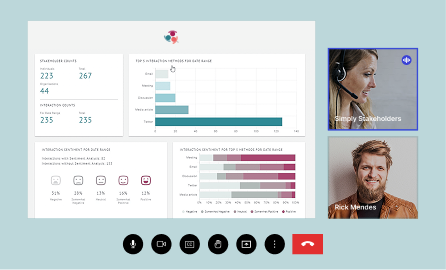
Simply Stakeholders is a purpose-built stakeholder relationship management platform designed for government and companies operating in complex, high-stakes environments. It has embedded AI functionality that helps organisations transform their stakeholder relationships into institutional intelligence.
It acts as:
- A system of record for stakeholder engagement
- A coordination engine across teams
- A memory layer for stakeholder ecosystems
Enabling organisations to:
- Maintain accurate engagement histories
- Track commitments and outcomes
- Track sentiment, relationship health and other trust indicators
- Coordinate communication across teams
- Provide defensible records for compliance and reporting