Turning Community Feedback into Stakeholder Intelligence for Renewable Energy Projects

Renewable energy projects live and die on community acceptance. But opposition is rarely driven by technical factors alone. Approvals, financing, and long-term operations all depend on whether local communities, landowners, and regulators trust what is happening and believe the process is fair. Research on renewable infrastructure in regional Australia confirms that opposition is shaped not only by direct impacts, but by wider social dynamics and narratives about trust, fairness, and who benefits from change. That trust is increasingly tied not just to social licence, but to the broader expectation that projects create lasting value.
That is why community feedback should not be treated as a box-to-tick compliance record, a list of objections, or a report to file away. It should be treated as strategic intelligence about trust,fairness, local identity, emerging risk and the narratives shaping support or resistance around a project.
Most developers invest heavily in engagement through landowner meetings, surveys, and digital campaigns, yet the knowledge from those interactions often stays trapped in reports, email trails, and spreadsheets instead of informing decisions.
The knowledge from those interactions rarely becomes project intelligence.
It sits in consultant reports, email trails, and scattered spreadsheets instead of actively shaping decisions.
This is where purpose-built stakeholder management software for energy companies becomes important, because it helps teams turn engagement activity into usable stakeholder intelligence rather than disconnected records.
This post explores how renewable energy teams can turn community feedback into strategic intelligence that de-risks projects, strengthens social licence, and makes every future project smarter than the last.
When engagement becomes box-ticking compliance
In many renewable and transmission projects, community engagement is still experienced as a tick‑the‑box exercise. The Australian Energy Infrastructure Commissioner’s Community Engagement Review found recurring complaints that communities feel “not informed, respected and at worst being patronised,” with engagement perceived as something done to them rather than with them. Despite extensive consultation activity, this kind of experience erodes trust and fuels resistance.
Many of the problems here show up as classic renewable development bottlenecks, including fragmented communication, repeated stakeholder concerns, and poor visibility of emerging risk across the lifecycle. When boards and ESG leaders only see milestone reports, they miss the live picture of sentiment, influence, and community risk that should shape project decisions earlier.
The Review made nine recommendations, accepted in principle by the Australian Government, aimed at lifting engagement from process to genuine participation and benefit. To meet that expectation, developers need more than activity logs – they need a clear, evidence‑based picture of how communities are experiencing engagement over time.
The AEIC Community Engagement Review drew on more than 75 stakeholder meetings, over 250 survey responses and more than 500 written submissions about how renewable and transmission projects are engaging with communities. Common concerns included poor transparency, late engagement, inadequate complaint handling, and limited local benefits.
At a high level, the Review highlights three things project teams should treat as strategic intelligence, not just “communications issues”:
-
Trust and transparency – whether communities feel informed, listened to and treated with respect.
-
Timing and continuity – whether engagement starts early and continues through planning, construction and operations, rather than appearing only at approvals milestones.
-
Fairness and benefits – whether impacts and benefits are seen as fairly shared, including for the wider regional community, not just directly affected landholders.
These dimensions can and should be tracked explicitly in a stakeholder system, alongside issues, sentiment and commitments, so they can be reported back to boards and regulators as indicators of whether engagement is meeting best‑practice expectations.
What “project intelligence” from engagement actually means
In many renewable project teams, engagement is still organised around milestones such as scoping, environmental review, and approvals submissions rather than as a continuous source of insight. That approach may satisfy minimum process requirements, but it often means lessons are not carried into later stages like construction and operations, and future projects start again without a clear institutional memory.
Project intelligence is more than a log of meetings or submissions; it is a live, structured view of sentiment trends, recurring themes, influential stakeholders, and emerging risks across time and geography. For renewable developers, that could mean recognising repeated concerns about traffic, visual impact, biodiversity, noise, compensation, or benefit-sharing before they escalate into approval delays or reputational issues.
This kind of intelligence helps project directors and boards understand not just what engagement happened, but what it means for delivery, risk, and long-term relationships. It also supports the broader transition story, because managing stakeholder expectations well is central to the long-term transition to renewable energy, especially in regional communities experiencing cumulative change.
Why trust matters as much as impact
Research on opposition to renewable energy infrastructure as well as industry experience is clear that resistance is shaped not only by project impacts, but by the social narratives communities use to interpret them. In practice, that means concerns about noise, traffic, land use, or visual impact may sit inside bigger questions: who benefits, who carries the burden, who is listened to, and whether the developer is seen as credible and fair.
For project teams, this changes what good stakeholder intelligence looks like. It is not enough to record that a stakeholder raised a concern about transmission alignment or construction traffic. Teams also need to understand whether that concern reflects a wider breakdown in trust, a perception of unfairness, or a local narrative that the region is being asked to absorb disproportionate change for someone else’s benefit.
That is where better structure matters:
-
Track trust indicators, not just issue categories.
-
Capture whether concerns relate to fairness, transparency, benefit-sharing, responsiveness, or cumulative burden.
-
Analyse how these themes cluster across communities, regions, and project stages.
Structuring stakeholder data so it can be analysed
The biggest obstacle to stakeholder intelligence is unstructured data spread across email, PDFs, consultant reports, and personal notes. Without a consistent way to capture who said what, when, and why, teams stay stuck in reconstruction mode and cannot reliably spot patterns or compare issues across projects.
The AEIC Review and related submissions make it clear that communities care as much about how engagement is done as about the final project design. That means your stakeholder data model should capture not just what topic was discussed, but how people feel about the process: whether they feel informed, respected, heard, and fairly treated. Adding fields and tags for trust, transparency, procedural fairness, and perceived benefit allows you to turn those qualitative impressions into trackable indicators that align with emerging expectations from government and industry bodies.
In renewable projects, issue tagging should go beyond operational topics like noise or traffic. It should also capture relational and narrative themes such as trust, procedural fairness, transparency, local benefit, and perceived inequity. Tracking these social dimensions can be central to understanding how resistance develops, making them critical inputs for stakeholder intelligence rather than “soft” context left out of formal reporting.
A stronger approach is to use a central system to capture stakeholders, organisations, properties, interactions, themes, sentiment, and locations in a structured way. For renewable and network teams, the energy-sector stakeholder management solution from Simply Stakeholders is positioned exactly around this need: standardising engagement records, reporting, and oversight across complex projects and regions.
Useful structure usually includes:
-
Stakeholder and organisation records linked to projects, properties, and regions.
-
Logged interactions such as meetings, calls, emails, events, submissions, and complaints.
-
Map interactions and issues to specific turbines, substations, transmission lines, or townships. This makes it easy to see geographic hot spots where concern or opposition is concentrated.
- Standard issue tags such as land access, cultural heritage, visual amenity, traffic, biodiversity, compensation, or local employment.
-
Sentiment or position fields that allow teams to track whether support is strengthening, weakening, or becoming active opposition.
Once data is captured consistently, it becomes possible to analyse not just activity, but patterns.
Using AI and analytics to surface risk early
Large renewable projects generate too much qualitative information to interpret reliably through manual review alone. AI and analytics help by surfacing common themes, shifts in sentiment, and emerging issues across meeting notes, complaints, and consultation inputs.
That allows teams to identify signals early, such as an increase in concerns about road safety across several project areas or stronger opposition emerging around transmission alignment changes. Or identify outlier comments that signal early warning signs, such as fears about groundwater, cultural heritage sites, or perceived inequity in benefit-sharing.
Combined with dashboards and reporting, these insights can then be translated into concise updates for project boards, risk committees, lenders, and ESG stakeholders.
AI and qualitative analysis become especially useful when the real signal is narrative rather than volume. A rise in comments about “not being heard,” “outsiders deciding for us,” or “all the impacts staying local while benefits flow elsewhere” may be a stronger warning sign than the raw number of submissions. Research on renewable infrastructure opposition highlights the role of these broader social dynamics, which means effective analytics should surface narrative patterns, not just count interactions.
Turning insight into better project decisions
Project intelligence only matters if it changes project decisions.
That means building a clear line of sight between stakeholder feedback and what the project actually does.
Community concerns need to feed into design decisions, mitigation planning, commitments tracking, and risk management rather than remaining in consultation summaries.
That means linking stakeholder themes to risk registers, approvals obligations, and executive reporting. It also means treating engagement as part of creating value, not just securing consent, which aligns with the movement leading energy companies are making from social licence to social value.
Practical applications include:
- Feed issues into design and mitigation
- If community feedback highlights strong concern about visual impact, lighting, or noise, ensure those themes are visible to design teams and decision-makers – not just the engagement team.
- Track which concerns were addressed through design changes, and which require mitigation or compensation.
- Connect insights to risk management
- Align your engagement themes and sentiment to the project risk register so social and community risks are tracked alongside technical and financial risks.
- Highlight where stakeholder concerns are increasing the likelihood or consequence of specific risks (e.g. delay risk, consent risk, reputational risk).
- Build regular stakeholder intelligence reporting
- Replace ad-hoc, milestone-only reports with quarterly or monthly stakeholder intelligence summaries.
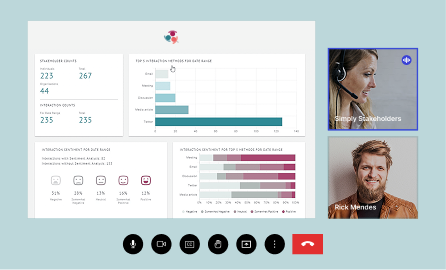
- Standard elements might include: sentiment heat maps, issue trends, top emerging risks, and key commitments made to stakeholders.
- Keep it short and executive-friendly so leaders can actually use it.
- Link commitments to accountability
- Make sure commitments made in meetings, negotiations, and benefit-sharing discussions are logged, assigned, and tracked to completion.
- This directly affects community trust, and it is often where projects stumble during construction and operations.
Building a reusable “memory” across your portfolio
For renewable developers and long-term owners, one of the biggest benefits of a stakeholder platform is portability of learning across projects. Each project should make the next one smarter, but that only happens when knowledge is stored in a shared, structured system rather than scattered across consultants, folders, and local spreadsheets.
By consolidating engagement data into a shared system across your portfolio, you can:
- See patterns across regions, technologies, and development stages.
- Reuse learnings about which engagement approaches worked with specific community types.
- Onboard new project teams faster, because they can see context from previous projects in the same area or with similar issues.
- Demonstrate to lenders, partners, and regulators that you are learning from experience – not repeating the same mistakes.
This is where a proper stakeholder relationship platform becomes a strategic asset, not just a database. It gives you an organisational “memory” of community sentiment, issues, and commitments across your entire portfolio.
Portfolio-level intelligence matters because communities interpret projects cumulatively. A wind farm, a battery, and new transmission infrastructure may be seen not as separate developments but as one broader wave of regional change, and communities are responding not just to one wind, solar, or transmission project, but to multiple waves of development over time. That makes it essential to track recurring trust issues and opposition narratives across projects, not just within each project boundary.
Simply Stakeholders’ article on stakeholder engagement and the transition to renewable energy is a useful companion here because it frames engagement as part of a longer regional relationship, not a single project event.
Getting started: a practical roadmap for renewable developers
You don’t need to rebuild your stakeholder approach overnight. A staged approach works best.
1. Start with one flagship or high-risk project
- Pick a project where approvals, community support, or ESG scrutiny are most critical.
- Consolidate existing records into one system: stakeholders, interactions, issues, commitments, and locations.
2. Standardise how you capture data
- Define a minimal, practical set of fields and tags that project teams and consultants can realistically maintain.
- Align theme codes and sentiment with your risk framework and ESG reporting needs.
3. Introduce basic analytics and reporting
- Begin with a simple stakeholder intelligence report each month or quarter for the project steering group and executives.
- Focus first on sentiment trends, top themes, and emerging risks rather than “everything we did”.
4. Scale to other projects and your portfolio
- Once the structure and reporting work for one project, roll out to other assets and regions.
- Use portfolio-level dashboards to spot cross-project patterns and refine your engagement strategy.
Turning stakeholder engagement into a strategic advantage
Community engagement will always involve complexity, emotion, and uncertainty. But the most effective renewable developers are not just getting better at recording interactions; they are getting better at understanding the social dynamics behind them. Research on opposition to renewable infrastructure in regional Australia points to the importance of trust and narrative in shaping local responses.
By capturing stakeholder information in a structured way, tracking trust and fairness themes alongside operational issues, and using analytics to surface patterns early, project teams can make better decisions and build stronger long-term relationships. That is how engagement shifts from administration to intelligence, and from risk management to strategic advantage:
- De-risk approvals and construction.
- Strengthen social licence and long-term relationships.
- Build a portfolio-wide “memory” that makes every new project smarter than the last.
For organisations still refining their overall delivery model, our earlier post on renewable energy project management challenges and stakeholder involvement can help connect engagement and stakeholder intelligence to the broader realities of project delivery.
The important shift is to stop asking only “Did we engage?” and start asking “What is this engagement telling us about project risk, trust, and future decisions?”
In Australia, the AEIC Community Engagement Review and related rule changes for major transmission projects signal a clear direction of travel: expectations on engagement will keep rising. Developers who can show, with data, that they are listening, responding and sharing benefits fairly will be better placed with communities, regulators and investors than those who rely on ad‑hoc records and one‑off reports.
About Simply Stakeholders
Simply Stakeholders is a purpose-built stakeholder relationship management platform designed for energy companies operating in complex, high-stakes environments.
It acts as:
- A system of record for stakeholder engagement
- A coordination engine across teams
- A memory layer for stakeholder ecosystems
Enabling organisations to:
- Maintain accurate engagement histories
- Track commitments and outcomes
- Track sentiment, relationship health and other trust indicators
- Coordinate communication across teams
- Provide defensible records for compliance and reporting