Using Agile Processes to Generate Agile Stakeholder Engagement

Phrases that put ‘agile’ and ‘stakeholder’ together can mean different things depending on how they connect to your project. For example, ‘agile stakeholder management’ is knowing how to manage stakeholders using the agile process.
Meanwhile, an ‘agile stakeholder’ refers to any internal or external stakeholder who is impacted by agile processes, or who has an interest in the outcomes of agile project management.
Confused? Hang in there. And let me introduce you to a third phrase.
‘Agile stakeholder engagement’ describes how stakeholder managers harness the power and flexibility of agile processes to improve stakeholder management and increase stakeholder engagement. And that’s what this article will focus on.
Using the agile project management framework as a guide, we’ll extract the work practices most relevant to stakeholder engagement, and consider how to apply them.
First, let’s make sure we’re all on the same page when it comes to understanding how agile projects work.
What Is Agile Project Management?
The Association for Project Management defines the agile process as follows:
“Iterative or agile life cycles are composed of several iterations or incremental steps towards the completion of a project…One of the aims of an agile or iterative approach is to release benefits throughout the process rather than only at the end. At the core, agile projects should exhibit central values and behaviours of trust, flexibility, empowerment and collaboration.”
The central values of agile project management — trust, flexibility, empowerment, and collaboration — align with core stakeholder engagement values. Yet, the principles and processes driving agile management aren’t generally applied to stakeholder engagement during most projects.
The Traditional Approach to Stakeholder Engagement
Most projects follow a linear and lockstep trajectory when it comes to stakeholder engagement; the stakeholder engagement plan is divided into chronological phases or stages. Each phase needs to be completed in order, so the results, analysis, and feedback can inform the next phase.
This approach is referred to as the ‘waterfall methodology’. Its processes mimic the way a waterfall cascades downwards; the information gathered at one step cascades into the next.
The waterfall methodology is a well-accepted and widely used way to manage stakeholder engagement. And it has its benefits. For example, gathering stakeholder feedback before making decisions can improve project strategy, minimize regulatory risks, help avoid conflicts, and lessen financial risks.
So what’s the drawback? Rigidity.
To return to the waterfall analogy, stakeholder engagement following its linear path is more likely to encounter dams and logjams and face delays. When these blockages form, the cascade slows or stops, which in the real world translates to people, teams, and entire projects being held up.
Agile stakeholder engagement is an alternative way of working that can eliminate those flow-stopping dams.

Making Stakeholder Engagement Work in an Agile Environment
Agile project management’s momentum waits for no man, woman, or stakeholder. And that’s one of the biggest challenges when it comes to engaging with stakeholders during an agile project: stakeholders become bottlenecks.
So where’s the middle ground? How can solid stakeholder relationships be built and maintained in a fluid, fast-paced agile environment?
Stakeholder engagement (and how it’s managed) has to change in an agile environment. And here’s what that might look like.
Incremental Improvements
Agile project management consists of sprints — pre-agreed blocks of work where everyone contributes simultaneously, making small and consistent changes until the work is done. But how would this work for stakeholder engagement? Particularly when it’s not always possible for stakeholder relationship management (SRM) teams to know all of the issues and needs of stakeholders at the start of the process.
A key factor in agile stakeholder engagement involves regularly updating and improving the stakeholder register, mapping, engagement strategy, and outreach methods, as new information comes to hand. Making these sprint-driven, incremental improvements helps keep the interests and goals of agile teams, organizations, and stakeholders aligned.
Individual Ownership at Every Step
Clear ownership of every stakeholder interaction or management action is needed throughout the project. Rather than assigning chunks of work to a whole team, a named individual takes specific responsibility for part of the outreach plan, data analysis, logging interactions, or task completion.
This detailed, person-specific level of ownership stops any ambiguity and streamlines the engagement process, ensuring feedback is gathered and tasks are completed promptly.

Cross-Team Visibility
For agile stakeholder engagement to work, each agile squad and stakeholder manager must see the same workflow process in real time. This visibility keeps the flow of work moving and abolishes the need for constant meetings.
Stakeholder information should be readily available to everyone who needs access to it. No gatekeeping, no need for constant access requests. This approach supports feedback loops and can maintain engagement throughout the project process or the lifetime of the asset.
| When not everything should be visible to everyone
Some stakeholder feedback and data may be sensitive or confidential. In this case, role-by-role access needs to be organized. For agile stakeholder engagement to work, permissions and access to sensitive data should either be defined as early as possible or as part of the incremental improvements process at the end of each sprint. |
Relevant Requests, Appropriate Formats
The agile environment enables quick decision-making. (Not to be confused with ill-informed decision making.) When each person understands their role and what they’re responsible for, pulling the information they need to make well-informed, strategic decisions is done in minutes or hours, rather than taking days.
In the context of agile stakeholder engagement, formatting is everything. Deliver engagement requests in a way that works for the stakeholder group and facilitates a response.
For example, if you’re approaching the IT team, use an online survey. If you’re contacting landowners in rural locations where you know their internet service is temperamental, phone them.
Everyone appreciates receiving engagement requests in a format they can work with. And this increases the chance of receiving feedback and finding solutions within a timeframe that works for the project.
What Agile Stakeholder Engagement Looks Like During an Agile Project
Understanding the ways agile project methods can facilitate stakeholder engagement paves the way for seeing how it fits into the agile process.
At Project Start: Mapping and Flow
You might not have identified all of the relevant stakeholders when an agile project begins. But start a stakeholder register anyway, listing known individuals and groups, followed by a stakeholder map.
Then create an accompanying document outlining the stakeholder flow — stating when different stakeholders will enter the project process, what’s needed from them (and for them), and how their engagement action or inaction will potentially affect the story or sprint.
This document is designed to preempt and hence reduce potential blockers that can slow the agile process.
During Development: Proactive And Continual Engagement
Traditional stakeholder engagement follows the sequential and lockstep process of:
- Engagement planning
- Outreach
- Engagement action
- Feedback analysis
- Reporting on findings.
Each process’s feedback and findings ‘cascade’ into the next phase.
Agile stakeholder engagement exposes stakeholders to every stage of the process in short succession. It means letting them get their hands on a product or service while it’s in development. Managing this engagement with ‘everything, everywhere, all at once’ calls for constant communication.
When a stakeholder is asked to engage and give feedback, the findings are acted on and the outcomes are fed back almost instantly. They’re then invited back as soon as the changes have been implemented to reevaluate the process, product, or software.
Effective management of stakeholders at this stage means having a proactive stakeholder — feedback findings, decisions, and actions should be sent out without prompting.
Maintaining the high-level of engagement needed in an agile environment can demand a lot of time and energy. Automating as many prompts and notifications as possible helps keep engagement on track. And can reduce the time a team spends chasing stakeholders to achieve the engagement needed to keep the process moving.

In Sprint Reviews: Stakeholder Management and Alignment
Use sprint reviews (sometimes called the ‘retrospective’) to amalgamate all of the stakeholder feedback gathered, share engagement successes, and acknowledge where engagement bottlenecks are still impeding success. These reviews are also the moment to propose and begin working on those incremental improvements in time for the next sprint.
Using Agile Stakeholder Engagement Effectively
Agile stakeholder engagement methods don’t suit every project. Managing stakeholders this way during a megaproject that involves tens of thousands of stakeholders and infrastructure decisions led by stakeholder feedback would be impossible.
A scenario where agile stakeholder engagement could work well is during local government digital transformation.
Instead of waiting for the design of the new digital platform to be completed using stakeholder feedback collected at one point in the project, agile engagement methods allow stakeholders to use the platform and its tools in staging environments. A development team can watch and monitor these interactions and make improvements and changes as they go.
The 6 Strengths of SRM Software in Agile Stakeholder Engagement
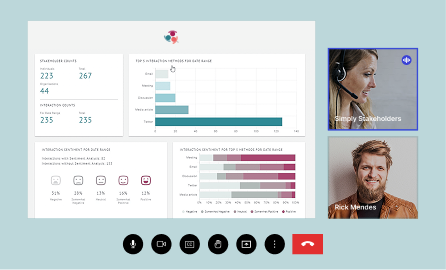
Stakeholder management software, such as Simply Stakeholders, is built from the ground up with stakeholder engagement and relationship management in mind. Its flexibility is ideally suited to agile engagement approaches. Even in complex and fast-paced project environments that rely on collaboration, it delivers the information needed for sound decision-making and clear action.
1. A Central Source of Truth
Centralized data creates a single source of truth, removing doubt, the danger of double-ups, or delays in accessing information needed during decision-making. And when teams can see the same information, the risk of miscommunication or misunderstandings lessens
2. Communication and Task Tracking Records
All historical and current stakeholder interactions and task assignments can be stored in SRM software. Teams can draw on reliable, consistently formatted data for past exchanges with stakeholders and use task tracking to see the engagement outcomes.
3. Real-Time Data
Updating stakeholder records and information is easy and gives teams real-time data on engagement levels and responses. The currency and completeness of this data make it easier to justify and make incremental changes in a way that progresses the project rather than holding it up.
4. Automated Prompts and Notifications
Workflows automated with rules and triggers can free up time and ensure the right stakeholders are engaged at the right time. Automations can also notify relevant team members by email if a risk arises, such as an incomplete action or negative sentiments that may impact project timelines.
5. Access and Permissions
Some stakeholder data may be sensitive or private. SRM software allows permissions to be customized and tailored for individuals and teams without sacrificing efficiency.
6. In-Built Stakeholder Engagement Tools
Stakeholder mapping, forms, communication tools (email, SMS, etc), and analysis support engagement and collaboration between the teams. They also provide revealing insights into stakeholder sentiments, provide feedback reports, and track complex relationships.
Embracing Agile Stakeholder Engagement
Agile project management processes lend themselves to effective stakeholder management by offering stakeholders real-time involvement, as opposed to periodic engagements. From an ongoing relationship management perspective, this is extremely valuable for a project.
When stakeholders feel consistently heard, understand the value of their feedback and opinions, and can see that they’re influencing outcomes at every stage, they’re more likely to support a project. But agile stakeholder engagement is just one approach to ensure stakeholder support.
Grab the Ebook: 7 Strategies for Effective Stakeholder Engagement
If you’re looking for ways to increase stakeholder engagement and build better relationships, download our free ebook.