Citizen Relationship Management Software: What It Is, Who Uses It, And How It Helps

Do your banking on your mobile. Download a book using your e-reader. Ask your virtual voice assistant to find you a recipe. And contact a company via your social media account. Technology has, undoubtedly, made completing a multitude of everyday tasks, easier and speedier.
In response, government agencies at all levels are implementing citizen relationship management software (CzRM) — offering systems and processes akin to the ones people use for banking, shopping, or renewing their car insurance. But is CzRM software really delivering the same quality experiences that the public has come to expect from commercial customer relationship management (CRM) processes?
This article will dissect the differences between CzRM and CRM and explain why these two peas could never be from the same pod. (And why that may be a good thing.)
What is Citizen Relationship Management?
CzRM is inspired by CRM practices and systems used by private businesses. Its purpose is to deliver equivalent processes, channels, and software systems for governments and public institutions. Government agencies use this technology to manage municipal tasks and duties, and support relationships with citizens.
Once established, a strictly-secured, well-maintained CzRM platform can safely store citizen data and provide the government or public institution with valuable insights. These insights can inform and shape reforms, and improve the quality of interaction experiences between government agencies and and their citizens.
CzRM Vs CRM Software: The Core Differences
CRMs may have influenced the rationale and goals of CzRM. But there are core differences between commercial CRM software and government-specific citizen relationship management software.
The purpose and target audience of each software system are wildly different.
Commercial CRMs are built to attract and retain a businesses’ target customers. Their profit-driven purpose is to provide the information a specific audience needs to complete the transaction process.
On the other hand, CzRMs, are designed to deliver essential information across a range of government-related topics and services to a diverse and wide-ranging electorate. Citizens from different generations and (sometimes) socioeconomic backgrounds need to access services and complete tasks with ease via a CzRM platform.
A quote which nails the difference between the two systems (but also currently eludes me) notes that a CRM supports a transaction of choice — the customer chooses to shop with a particular store. If they have a bad experience, the customer can choose to shop elsewhere next time. This isn’t true for citizen relationship management software.
Whatever citizen relationship management software a government offers its citizens, it’s their sole choice for completing (sometimes life-determining) tasks and fulfilling their civic duty.
Who Uses CzRM software?
CzRM software must serve two key groups.
Group One: Citizens Within the Municipality
Effective citizen remationship management software must give citizens access to government services and a way to communicate with elected officials. Widespread digital uptake means the public now expects to be able to complete almost any task online, including connecting and communicating with their local government.
Group Two: The Local Government and Associated Teams
The CzRM software must give local government personnel the tools to respond to and resolve citizen challenges and requests. This group may include local government workers, elected officials and leaders, as well as public works and service departments.

The Importance of Getting CzRM Right
Many government bodies have implemented some form of citizen relationship management software. But, unfortunately, when it comes to getting CzRM right , the impression is that most platforms miss the mark.
Current figures from the US-based Government Contact Centre Satisfaction Index report show citizens rated satisfaction with government contact centres at 68 points out of 100. While citizen satisfaction with the services from the federal government sits at 70 points. (It’s worth noting these results were published before the 2025 government shutdown.)
Both of these figures are improvements on previous years. But they’re still considered low.
Meanwhile, in Australia and New Zealand, local-level governments scored the lowest satisfaction level. A mere 55% of citizens engaged with their local government using the online software.
Accessibility, complex processes, and a lack of live support were the main reasons potential users stayed away.
Unlike commercial CRMs where an unhappy customer can simply choose not to shop there again, citizens engaging with government services don’t have that luxury. They either persevere. (Usually begrudgingly.) Or disengage. And disengaged stakeholders are likely to slow progress and present challenges. And the result? The owners of the CzRM platform find themselves in grievance management territory facing an uphill climb to improve stakeholder engagement.
So what does an efficient, citizen-friendly CzRM system look like?
Six Features Every Citizen Relationship Management Software System Should Have
There are dozens of CzRM systems and software platforms available. An effective citizen relationship management system will include these six core features.
1. Citizen Data Management
A centralized, secure database stores and manages citizen information, including contact details, interaction logs, and service requests.
2. Task, Commitments, and Service Management Tracking
Citizens submit cases, inquiries, and service requests.Governments log and track their progress, ensuring transparency, accountability, and timely completion.
3. Data Insights and Reporting
Rapid, intelligible data analysis that enables actionable reporting and informs strategic direction. So governments can confidently make decisions that meet the needs of citizens.
4. Automated Workflows
Routine administrative tasks are automated, freeing up staff time, minimizing the likelihood of errors, and speeding up processes for citizens.
5. Compliance and Security
All software and integrations used in the CzRM software are secured and comply with government standards and regulations on data storage.
6. Integration Capabilities
The citizen relationship management software integrates with other government technologies, such as payment portals, financial software, and messaging software — digital, phone, and electronic messaging. Citizens have flexible, efficient options for paying bills, purchasing services and contacting their representatives.
These six features are the minimum requirements for a functioning, compliant, and effective CzRM. To effectively meet the needs of all users, the system may also provide:
- Relationship and stakeholder mapping
- Survey, form and outreach communications
- Feedback and listening tools
- A citizen self-service portal that includes:
- Document and photo uploads
- Form submission
- Inquiry tracking
- Account management.
Essential Features Lead To Big Benefits
Any marketer worth their salt will tell you that benefits outsell features every time. So for local governments still exploring the whys and wherefores of citizen relationship management software, let’s look at how it can deliver tangible benefits.
Better Citizen Service
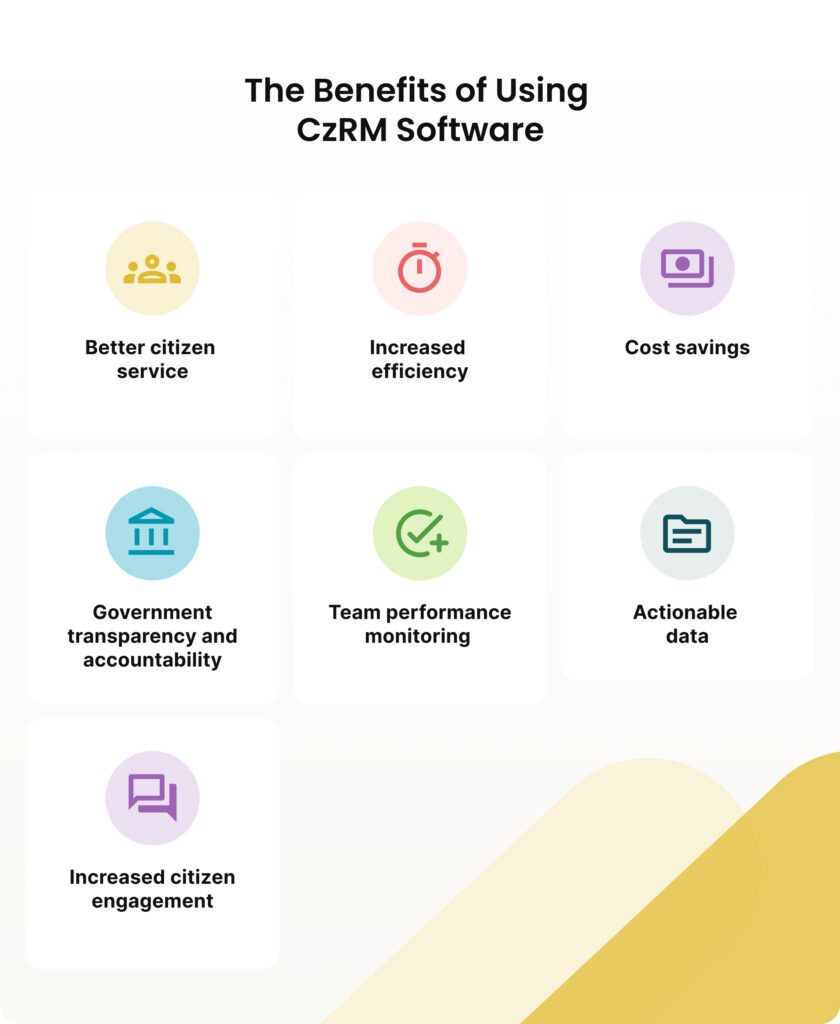
From a citizen’s perspective, a CzRM platform exists to make their lives and their relationship with their elected representatives easier, simpler and more satisfying. Whether it’s cutting down call-wait time, completing some services digitally, or expressing their concerns and delivering feedback. An effective CzRM system gives citizens control and a voice, so they feel heard, served, and engaged. Give them this and those citizens are more likely to be proactive when it matters most.
For governments, the CzRM software becomes a centralized source of truth. The information and data it contains enables staff and representatives to give timely, effective responses to citizen inquiries and requests. It also provides intel and insight to support sound decision making.
Increased Efficiency and Cost Savings
Automating labor-intensive tasks reduces both the burden on government employees and the likelihood of errors. Together, these two benefits save time and money and reduce frustration and conflict. Suddenly there are more human and budgetary resources. Responses and relationships get streamlined. The risk of issues being accidentally double-handled diminishes.
Government Transparency and Accountability
Few things are as irksome or frustrating for citizens than feeling like their request or inquiry has been ignored or mishandled. CzRM software helps avoid constituent fury.
When a member of the public’s inquiry or request enters the system, a digital paper-trail is created. Depending on the specific software’s processes, the CzRM system generates and distributes clear step-by-step instructions for handling the inquiry. The task is delegated to the individual or team responsible for managing that action so they can follow through.
Live task tracking is becoming increasingly common on citizen relationship management platforms. This means everyone involved in the task, as well as the citizen who lodged it, can check on its status. Suddenly, people feel seen, government agencies are shown as being proactive, and obligations and commitments can be met promptly.
Team Performance Monitoring for Elected Officials
Depending on the size of the municipality, government agencies may process hundreds of daily requests, submissions and tasks. Elected officials responsible for monitoring the performance of their teams can do this efficiently in real time via the CzRM’s dashboard and reporting capabilities. This rapid and refined monitoring can be particularly beneficial by pre-empting and resolving potential conflicts and ensuring elected officials deliver on their promises.
For example, let’s imagine several reports come through about road damage in a certain area. In the following days, more exasperated reports of this damage appear on the system. This suggests the issue hasn’t been responded to, let alone resolved. This situation triggers an automated notification in the CzRM system that delivers alerts, reminders, and escalations. The result? Issues are less likely to get overlooked .
Actionable Data
Citizen request data is a powerful source of truth for local government decision makers. Trends and patterns within the data alert the local government to potential (or escalating) challenges, recurring issues, and gaps in their service.
Increased Citizen Engagement
Making municipal services and information readily available in easily accessible formats means the public are more likely to engage with their local government. More frequent and more satisfied engagement strengthens the relationship and builds public trust.
Make CzRM Part of Your Digital Transformation
Implementing, maintaining, or upgrading a citizen management software system requires planning and forethought. It must be fit for purpose and serve both the public and the local government. Getting the most out of the system means having a clear set of goals, governance policies, integrations, and an understanding of stakeholder needs.
Planning the adoption of CzRM software easily slots in with any local government digital transformation plans that are currently in the works. Building (or rebuilding) the systems and portals can be done simultaneously with these tasks.
Manage Citizen Requests and Multiple Stakeholders
Stakeholder relationship management recognises that for local government, the public is just one of many stakeholder groups they should engage with.
Contractors, public institutions and services, businesses, tourists, and community groups contribute to the diverse stakeholder relationships that a local government must manage. And it’s why government agencies may seek smarter stakeholder management that delivers all of the software tools and integrations needed to manage the myriad of relationships, rather than a dedicated citizen-only platform.
Dedicated CzRM software is still an emerging technology. Salesforce Government Cloud and CivicPlus deliver a solution focused on municipal governments managing public requests and services. But there are systems and platforms that offer citizen relationship management tools, along with a lot more.
Ready-To-Go Government Stakeholder Software
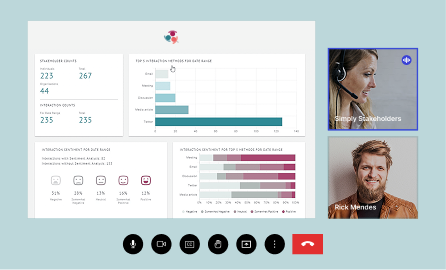
From templates to tools, Simply Stakeholders is built for government users and their citizens.