How to Involve First Nations Groups in Projects

When your project has the potential to affect Traditional lands or Indigenous peoples, it matters that you involve First Nations groups from the get-go. Genuine, early, culturally-sensitive engagement increases opportunities for shared benefits and achieving sustainable, inclusive outcomes.
In this article, we’ll share the stakeholder engagement principles and techniques most relevant to involve First Nations groups in projects. But let’s start by looking at why authentic engagement with First Nations peoples matters.
Understanding the Importance of Engaging First Nations Groups
There are three essential interlocking reasons why engaging First Nations stakeholders is vital for project success.
- Legal obligations: Laws such as The Native Title Act 1093 (Cth) in Australia and international principles such as the UN’s Free, Prior, and Informed Consent (FPIC) principles offer legal protections to Indigenous peoples.
- Ethical considerations: Recognizing the human rights of Indigenous peoples to self-determination and pre-existing rights and interests according to the traditional laws and customs.
- Cultural responsibility: Committing to minimize potential harm to Indigenous sites of cultural significance, recognizing and respecting First Nations’ connection to land, water, and traditions.
The sensitivity and success with which an organization manages all three of these factors reveal its governance maturity level.
What is Governance Maturity and How Does it Relate to First Nations Stakeholders?
Governance maturity is a measure of how effectively an organization’s policies, compliance, investment, and stakeholder relationships support its overarching goals and objectives.
In her recent article on the subject, Simply Stakeholders CEO Allison Hendricks stated that “projects that integrate land access, approvals, First Nations partnership, community engagement and investor requirements from the outset gain certainty and social licence; those that silo these functions face delays, opposition and cost blowouts.”
To highlight the importance of developing governance maturity, let’s look at Australia.
More than 60 per cent of Australian resources projects operate on land covered by a Native Title claim or determination. Projects that demonstrate governance maturity — engaging respectfully, fostering trust, and communicating mutual benefits and long-term partnerships — are the ones setting themselves up for success.
So what might these projects be doing to ensure they’re on the right track?
Foundational Steps for Meaningful Engagement
This isn’t the time or place for a history lesson. But we can agree that there are valid reasons Indigenous communities view the projects of non-Indigenous organizations with caution and scepticism. What’s important now is understanding how to break down those barriers and acknowledge the need for reconciliation.
Meaningful project engagement involving First Nations groups starts with understanding that any relationship built with a community should have depth and longevity. Organizations should take deliberate steps to prioritize cultural understanding, gain the community’s trust, and ensure transparent communication at every opportunity.
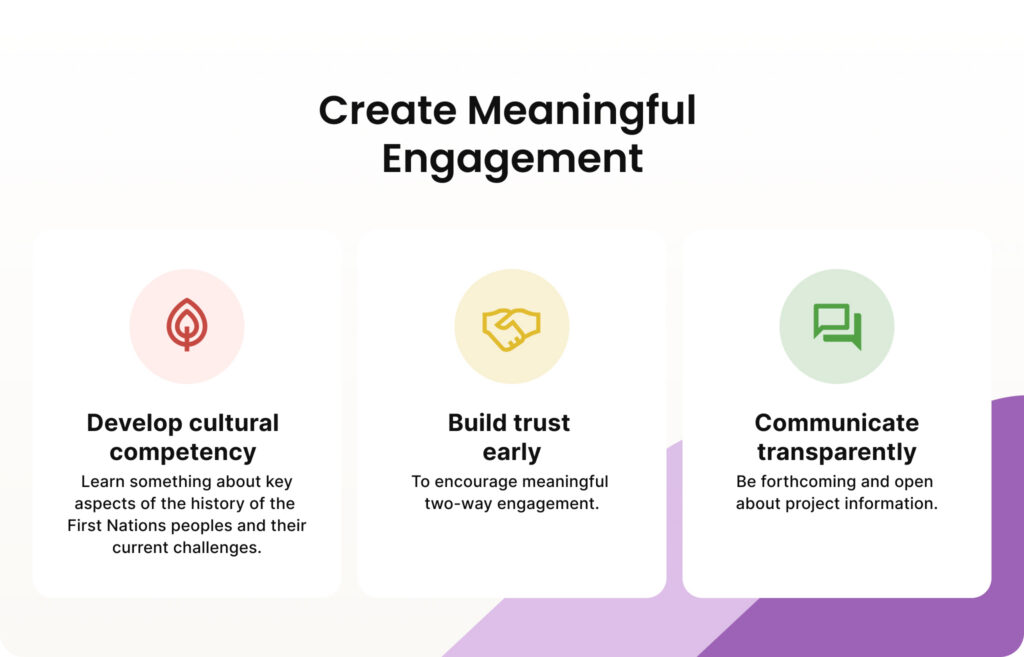
Here are the three key stakeholder engagement principles to invoke before directly engaging First Nations groups. And the knowledge gained in the process should influence how the project is designed and implemented. (But more on that shortly.)
1. Develop Cultural Competency
Developing cultural competency means familiarizing yourself with the knowledge, heritage, belief systems, and way of life for people not of your own culture or race. An example might be learning about the Dreamtime from Aboriginal culture or the animal spirit rituals of the Inuit peoples. But beyond these spiritual and cultural examples, it also involves recognizing current health, living, and socioeconomic challenges these communities encounter today.
Building cultural competency within your organization could involve:
- Reading and discussing books and articles published by Indigenous peoples
- Inviting an Indigenous educator, group, or Elder to deliver a talk on their heritage
- Attending and supporting events organized by local Indigenous communities.
2. Build Trust Early
All relationships strengthen over time. Involving First Nations groups early lays strong foundations for your relationship and a firm basis for building trust as the project progresses.
Genuine trust building also helps to get beyond surface-level engagement. If communities sense their voices are only being considered as a token or an afterthought, they are less likely to get involved — even if you’ve created the best community engagement plan in stakeholder management history. (This is true of any stakeholder group. Not just First Nations.) Allow time for meaningful relationship building, and helpful, collaborative two-way dialogue will flourish.
3. Communicate Transparently
Organizations should be forthcoming with information about the project — sharing details and developments as openly and as freely as possible.
Communicating with the community could look like:
- Holding town halls or other stakeholder meetings
- Sending electronic messages (emails, texts, websites)
- The publication of papers, documents, and flyers.
The best form of stakeholder communication is the one that best fits with the habits and lifestyle of the stakeholder group.
Effective Engagement Practices
The three principles — cultural competency, trust building, and transparent communication — underpin how an organization goes on to successfully build stakeholder relationships. And while there are many helpful practices that foster strong, inclusive relationships, these are the ones that will likely drive collaboration and positive outcomes when engaging First Nations groups.
Establish Partnership Protocols
When partnering with a First National community group, organization, or non-profit, it’s useful to define shared goals and interests from the outset.
Once these have been agreed, consider creating a formal agreement. This document can serve as a practical, operational framework that both parties can refer to.
The agreement may cover:
- The different roles and responsibilities within the partnership
- The project’s shared and singular objectives and priorities
- Project timeframes and deadlines, and the deliverables expected by those dates
- How disputes and complaints can be lodged and managed
- How project reporting will be arranged and managed.
In Australia, Indigenous.gov.au — a group that connects First Nations peoples with Australian Government programs — helped create the First Nations Partnership Playbook. It includes some guidelines for creating agreements and outlines how Australian organizations and governments can develop meaningful stakeholder partnerships with Indigenous groups.
Adapt to Community Needs
The organization’s priorities may not always align with those of the First Nations groups involved in the project. Both known and unknown cultural responsibilities may shift the focus
Agile projects can weather these changes by being flexible and responsive enough to relieve pressure on First Nations groups when plans need to change. This agility maintains positive engagement and collaboration, and ultimately leads to better decision-making.
Empower Participation
Whether it’s providing literature in the local language, understanding (and removing) barriers to access, or identifying community champions, projects that deliver frictionless participation will ensure the voices and values of First Nations people are included from planning to implementation.
Benefit Sharing and Capacity Building
Fairly sharing the benefits that flow from using Indigenous lands, traditional knowledge, and the resources taken from them is an ethical business practice and a recognition of Indigenous human rights. In Australia, organizations have the choice to create Reconciliation Action Plans (RAPs), supported by Reconciliation Australia, an organization established to empower the relationships between organizations and Indigenous communities.
A pragmatic, values-driven focus on shared benefits and capacity building leads to projects that deliver long-term impact, growth, and sustainability for future generations.
If that’s what your project is seeking to achieve, then consider these points.
Find Equitable Opportunities
This relates to ensuring that the projects’ economic benefits flow through to First Nations communities. This can include:
- Job creation (for the duration of the project or after, as a result of project completion)
- Local training and internships
- Local business involvement or procurement
- Community grants awarded as a result of the project
- Community shares and equity stakes.
Equitable opportunities should, ultimately, support community growth and deliver benefits to the area or community that weren’t present before the project started.
Offer Shared Benefits
The vast amounts of land taken up by projects of all kinds — from mining and fossil fuels extraction to renewable energy initiatives — put further pressure on Native Title lands. These projects have the potential to push Indigenous communities further from the lands and waters they’re so connected to.
Initiatives such as co-ownership and equity ownership (sometimes referred to as economic reconciliation) seek to redress this challenge beyond simply offering a compensation sum.
For example, offering royalty agreements from infrastructure projects can unlock economic empowerment by providing ongoing financial resources for reinvestment in the community. These agreements increase opportunities for self-determination by supporting funding for health, education, cultural preservation, and environmental stewardship.

Long-Term Impact
It’s rare for modern, forward-thinking projects not to include future planning assessments. Foreseeing the long-term impact of the project and ongoing deliverables beyond the date of project completion are one part governance maturity, one part ESG awareness.
Sometimes referred to as ‘intergenerational benefits’, these positive impacts should cover capacity building, mentorship opportunities, and sustained partnerships between the local community and the organization or government.
Monitoring and Continuous Improvement
Like any relationship, the bond an organization forms with a stakeholder group needs ongoing nurturing and refining. That’s why it’s important to continue to monitor stakeholder engagement throughout a project. (And sometimes long after.)
Opportunities to continually improve relationships may involve:
- Tracking progress: And being proactive in delivering progress updates for First Nations communities
- Adapting practices: To suit the ongoing and evolving needs of the community as well as the project and organization
- Feedback loops: These encourage feedback and knowledge sharing to improve the outcomes for both the project and the First Nations people
- Active community engagement: By attending community events and being actively involved in all aspects at the heart of a healthy relationship, beyond focusing on the economic benefits.
- Celebrating successes: To boost team and community morale, and demonstrate the positive outcomes of the project.
Case Study: A Model of Successful Collaboration
A positive example of involving First Nations groups in projects is the Waraba place name project in South-East Queensland.
A property development for 70,000 new homes was planned in an area known as ‘Caboolture West’. As part of the planning process, the Moreton Bay Regional Council engaged the local Kabi Kabi people to ensure any new names chosen for the area and internal suburbs were:
- Culturally and historically appropriate
- A reflection of the local indigenous language
- Supported by Traditional Custodians.
Not only did this encourage engagement and ensure the Council met legal obligations under the Place Names Act of 1994, but it also fostered community support. The new names and boundaries were embraced by the Kabi Kabi stakeholders who would be directly impacted by the development.
The collaborative approach taken by Moreton Bay Regional Council was considered highly successful and earned the project a Highly Commended placing for the Planning category at the 2023 IAP2 Australasia Core Value Awards.
How Simply Stakeholders Can Assist when Involving First Nations Groups in Projects
Effective stakeholder engagement tools support organizations in establishing and maintaining strong relationships and building trust with all stakeholder groups, including First Nations people. This, in turn, helps ensure you fulfill both your legal and ethical responsibilities, develop governance maturity, and contribute to a sustainable future for these communities.
If you’ve reached a point in your project where you need to prioritize genuine collaboration with First Nations communities, Simply Stakeholders can help.