Community Benefit Sharing in Western Australia’s Renewable Energy Transition

The Western Australian Government, through PoweringWA, has released new guidance on Community Benefits for large-scale renewable energy projects in the South West Interconnected System (SWIS). The guidance introduces place-based Community Benefit Plans (CBPs), a tiered approach to benefit sharing, and confirmation that a pilot program will be undertaken later this year to test implementation on the ground.
This paper examines the key features of the new guidance, assesses its implications for renewable energy developers, local governments, and host communities, and explores what practitioners should watch for as the framework moves from policy to practice. Critically, we argue that the complexity of stakeholder engagement required by this guidance—spanning community members, Traditional Owners, local governments, unions, developers, and Regional Development Councils—demands a systematic, technology-enabled approach to stakeholder management.
The new WA Community Benefits Guideline represents a significant step forward in Australia’s approach to ensuring host communities share in the value of the renewable energy transition. For practitioners, the question is no longer whether to engage—but how to do it well, transparently, and at scale.
Summary
PoweringWA’s new guideline for large-scale SWIS projects introduces place-based Community Benefit Plans, early proponent commitments, lifecycle (CPI-indexed) benefits, and strong transparency and representative engagement requirements, with a pilot to test implementation. While non-regulatory, success depends on clear governance, adequate resourcing for local governments and communities, and learnings from the pilot. It carries significant implications for developers, LGAs, host communities, Traditional Owners, unions, and Regional Development Councils, while safeguarding existing obligations. Given the complexity and duration of commitments, practitioners should adopt systematic, technology-enabled stakeholder management as similar approaches expand nationally.
The Context: Why Community Benefit Sharing Matters Now
Australia’s energy transition is accelerating. Across the country, large-scale wind, solar, and battery projects are transforming regional landscapes and reshaping local economies. But the benefits of this transformation have not always flowed proportionally to the communities that host these projects. Regional towns bear the visual, environmental, and social impacts of new energy infrastructure—while the economic gains often accrue at state or national levels.
This imbalance has created a growing social licence challenge. Research by RE-Alliance found that the lack of consultation and engagement with local communities was the second highest concern (79 percent) among regional Australians considering the development of large-scale renewable energy infrastructure. In the United States, an estimated 300 transmission, wind, and solar projects have been delayed by community opposition, impacting around 74,000 jobs and US$88 billion in investments.
Western Australia has responded to this challenge by developing a Community Benefits Guideline, released through PoweringWA, the state’s energy transition delivery body. The guideline was informed by extensive public consultation and direct engagement with key stakeholders, including local governments, industry, and community groups. It follows the release of the draft Renewable Energy Planning Code, which is currently open for public comment until 10 April 2026, creating a comprehensive and integrated approach to renewable energy planning and community engagement in WA.
While these guidelines currently only apply to large-scale renewable energy generation and standalone BESS projects (>10 MW) connected to the SWIS, it is likely that future guidelines and requirements will also be created for smaller scale projects. Renewable energy developers would do well to take heed of these guidelines as it is expected that similar guidelines and requirements will be established across the country.
Key Features of the New Guidance
On first reading, there is much to be encouraged by in the new WA Community Benefits Guideline. Several features stand out as particularly significant for the sector.
1. Place-Based Community Benefit Plans
At the heart of the guidance is the introduction of Community Benefit Plans (CBPs)—place-based documents developed collaboratively with input from a broad cross-section of the local community. Each plan provides a clear, publicly available framework for allocating resources, promoting accountability, and aligning with community-identified priorities. Funding is targeted to initiatives that strengthen local resilience.
This is a meaningful departure from ad hoc benefit sharing arrangements. By requiring plans to be developed by the community, the guidance positions local voices at the centre of decision-making, rather than leaving benefit design solely to developers or government agencies.
2. Commitment Required Prior to Development Approval
The guidance requires proponents to commit to community benefit arrangements before submitting their development application. This is significant because it embeds benefit sharing as an integral part of project planning—not an afterthought or a condition negotiated under pressure during the approvals process. It signals to communities that their interests will be considered from the earliest stages of project development.
3. Social and Economic Benefit Recognition
The guideline recognises both social and economic benefits, with community priorities positioned as central to the process. Examples provided in the guidance illustrate outcomes rather than simply dollar figures—a welcome shift that acknowledges the diverse ways communities define value. This could include infrastructure improvements, skills and training programs, cultural preservation initiatives, or local supply chain development.
4. Active, Representative, and Proactive Engagement
The language around engagement is notably strong. The guidance references the need for “active,” “representative,” and “proactive” participation, with specific mention of the need to engage local government authorities, developers, union bodies, key community groups, community members, Traditional Owners, and local Aboriginal groups. This breadth of stakeholder inclusion reflects best practice in community engagement and aligns with the growing expectation that engagement must go beyond ticking a box.
5. Benefits Across the Entire Operational Lifecycle
Rather than limiting benefits to the construction phase, the guidance focuses on delivering benefits throughout the entire operational lifecycle of a project. Given that renewable energy assets often operate for 25 to 30 years or more, this long-term perspective is critical. Contributions are to be indexed to the Consumer Price Index to ensure their value is maintained over time. This recognises that community needs evolve over time and that benefit arrangements should be flexible enough to adapt.
6. Transparency and Public Accountability
PoweringWA has committed to hosting a public register of Community Benefit Plans on their website. This transparency mechanism is important for building trust between developers, communities, and government. It allows communities to benchmark arrangements, hold proponents accountable, and learn from the experiences of other regions.
7. Protection of Existing Commitments
The guidance includes clear exclusions preventing Community Benefit Plans from replacing existing commitments or protections owed to local governments; to offset or substitute for conditions imposed through environmental or planning approval processes; or replace matters relating to the Native Title Act 1993 or the Aboriginal Heritage Act 1972. Community benefits cannot be used for regular LGA expenses or to address construction impacts such as damage to roads or vegetation. This is a sensible safeguard that ensures benefit sharing is additive, not a mechanism for developers to trade off existing obligations.
What to Watch: Implementation Considerations
While the guidance represents a strong foundation, several implementation details will be worth monitoring closely as the framework is put into practice.
Guidance, Not Mandate
The framework is guidance, not regulation. The language ranges from stronger standards like “ensure proactive participation” to more flexible directives such as “should be” and “should consider.” This flexibility may be appropriate for a new framework, but it does leave open the question of enforceability. WALGA has already flagged its desire for greater clarity on whether guidelines will be binding on all proponents. Without a mandatory mechanism, there is a risk that some developers may treat the guidelines as aspirational rather than operational.
The Pilot Program
The announcement of a Community Benefits Plan Pilot later this year is an important step. The pilot will provide on-the-ground learnings and evidence to develop a toolkit supporting broader roll-out and uptake. The design, location, and evaluation criteria of the pilot will be closely watched by industry and community stakeholders alike. Success will depend on genuine community participation in the pilot process and a willingness to adapt the framework based on what is learned.
Community Benefit Advisory Groups and Governance
The governance model proposed for benefit funds—with Regional Development Councils serving as fund custodians—will be a critical factor in the framework’s success. Questions remain about how Community Benefit Advisory Groups will be constituted, how they will ensure representative membership, and how competing priorities within a community will be resolved. Effective governance requires clear terms of reference, transparent decision-making processes, and mechanisms for accountability and dispute resolution.
Capacity and Resourcing
Meaningful community engagement is resource-intensive. Small regional local governments may lack the capacity to effectively participate in developing, implementing, and monitoring Community Benefit Plans alongside their existing responsibilities. The success of the framework will depend in part on whether adequate support and resourcing is provided to communities and local governments to participate fully.
Implications for Key Stakeholders
| Stakeholder Group | Key Implications |
| Renewable Energy Developers | Must commit to community benefit arrangements before submitting development applications. Need systems to track diverse stakeholder groups, manage engagement across the project lifecycle, and demonstrate compliance with transparency requirements. |
| Local Government Authorities | Central role in CBP development and oversight. Will need to balance community advocacy with administrative capacity. May require additional resourcing and tools to manage the complexity of multi-stakeholder engagement. |
| Host Communities | Empowered to shape benefit priorities through place-based plans. Must be supported to participate meaningfully, with attention to representative engagement across demographics and interest groups. |
| Traditional Owners & Aboriginal Groups | Explicitly recognised as key stakeholders requiring proactive engagement. Benefit plans must reflect cultural priorities and respect existing native title and heritage frameworks. |
| Regional Development Councils | Proposed custodians of benefit funds. Will need transparent governance frameworks, clear accountability mechanisms, and the capacity to manage long-term fund administration. |
| Union Bodies | Recognised as stakeholders in the engagement process. Can advocate for local employment, skills development, and workforce conditions as part of community benefit arrangements. |
Why This Guideline Demands a Stakeholder Management System
The WA Community Benefits Guideline creates a new level of complexity in stakeholder engagement for renewable energy projects. Consider what the guidance requires:
- Identification and proactive engagement of multiple stakeholder groups—local government, Traditional Owners, unions, community organisations, individual residents, and developers
- Collaborative development of place-based Community Benefit Plans that reflect community-identified priorities
- Transparent tracking of commitments, engagement activities, and benefit delivery over the entire operational lifecycle (25+ years)
- Demonstration of representative and inclusive participation across diverse community segments
- Public accountability through a register of Community Benefit Plans hosted by PoweringWA
Managing this level of engagement using spreadsheets, email threads, and ad hoc documentation is not just inefficient—it is a risk. When community benefit commitments span decades, when transparency is a public expectation, and when social licence depends on demonstrable engagement, organisations need purpose-built tools.
How Simply Stakeholders Supports Compliance with the New Guidance
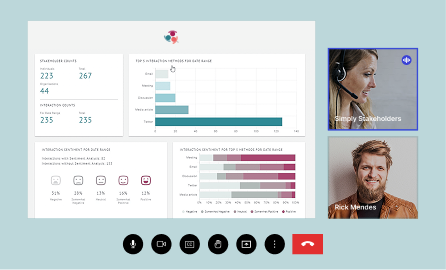
Simply Stakeholders is a cloud-based stakeholder relationship management platform designed specifically for the complexity of multi-stakeholder engagement across large-scale projects. Here is how the platform directly supports the requirements of the WA Community Benefits Guideline:
Centralised Stakeholder Register and Mapping
The guidance requires proactive engagement with a diverse range of stakeholders. Simply Stakeholders provides a centralised register where developers and local governments can record all stakeholder contacts, segmented groups, relationships, and interactions in one location. Multidimensional stakeholder mapping and 3D relationship network maps allow teams to visualise who they are engaging, identify gaps in representation, and ensure no stakeholder group is overlooked—a critical requirement when the guidance demands “representative” participation.
Commitment Tracking and Accountability
Community Benefit Plans will create specific commitments that must be delivered over the life of a project. Simply Stakeholders’ commitment tracking module allows organisations to record commitments, connect them to relevant stakeholders and projects, and track delivery against agreed milestones. This creates a robust and auditable record that supports the transparency requirements of the guideline and helps protect both community interests and the developer’s reputation.
AI-Powered Sentiment and Issues Analysis
Understanding community sentiment is essential for developing benefit plans that genuinely reflect community priorities. Simply Stakeholders uses AI-powered tools to automatically detect issues and sentiment from engagement data, revealing what matters most to stakeholders and where concerns are emerging. This enables more responsive and adaptive engagement—particularly important during the pilot phase, when the framework is being tested and refined.
Compliance Reporting and Dashboards
The guideline’s transparency requirements mean that developers and local governments will need to demonstrate who they have engaged, what was discussed, and how stakeholder input has influenced benefit plans. Simply Stakeholders’ custom reporting dashboards and compliance-driven reporting templates make it straightforward to produce evidence for compliance, track engagement metrics, and share insights with Community Benefit Advisory Groups and the public register maintained by PoweringWA.
Long-Term Relationship Management
With benefits expected across the entire operational lifecycle of a project, stakeholder relationships must be managed over decades, not just during the approvals phase. Simply Stakeholders’ relationship health scores and interaction tracking ensure that engagement continues to be meaningful over time, with alerts and task management tools keeping teams accountable for ongoing relationship maintenance.
Multi-Project and Multi-Stakeholder Coordination
For developers managing multiple renewable energy projects across different communities, or for regional bodies overseeing benefit delivery across several projects, Simply Stakeholders provides multi-project views and shared team access. This ensures consistency in engagement practices while allowing each community’s plan to reflect local priorities.
When the guidance demands transparency, accountability, and representative engagement over 25+ years, spreadsheets simply cannot keep up. A purpose-built stakeholder relationship management system like Simply Stakeholders provides the infrastructure to deliver on community benefit commitments reliably and at scale.
Looking Ahead: A National Trend
Western Australia’s Community Benefits Guideline does not exist in isolation. New South Wales has already implemented its own Benefit Sharing Guideline for renewable energy projects, with specific rates tied to project capacity and requirements embedded in the planning approval process. Victoria’s VicGrid has released its 2025 Transmission Plan with community benefit considerations woven throughout. And at the federal level, the Department of Climate Change, Energy, the Environment and Water is tracking state and territory actions on community engagement and benefit sharing.
The direction is clear: community benefit sharing is becoming an expected component of responsible renewable energy development across Australia. The practitioners and organisations that invest now in building the systems, capabilities, and relationships to deliver on these expectations will be better positioned—not just for compliance, but for genuinely equitable outcomes that strengthen both projects and communities.
Conclusion
The new WA Community Benefits Guideline represents a thoughtful and community-centred approach to ensuring that the renewable energy transition delivers lasting value to the communities that host it. The emphasis on place-based leadership, representative engagement, lifecycle benefits, and public transparency sets a high bar—one that reflects growing community expectations and the lessons learned from other jurisdictions and industries.
For renewable energy developers, local governments, and community leaders, the practical challenge is now implementation. The complexity of managing multiple stakeholder relationships, tracking commitments over decades, demonstrating representative engagement, and maintaining public accountability requires more than good intentions. It requires the right tools.
Simply Stakeholders provides the purpose-built platform that makes this possible—turning the aspirations of the Community Benefits Guideline into demonstrable, trackable, and transparent outcomes for communities and projects alike. As the pilot program rolls out later this year, now is the time to invest in the stakeholder management infrastructure that will underpin successful community benefit sharing for the long term.
| Ready to strengthen your stakeholder engagement? Simply Stakeholders helps renewable energy developers, local governments, and community organisations manage the relationships that matter most. Request a demo at simplystakeholders.com or contact our team to discuss how we can support your community benefit engagement. |
Q&A
Question: Who does the new WA Community Benefits Guideline apply to, and what is it trying to achieve?
Short answer: The guideline, released by PoweringWA, currently applies to large-scale renewable energy generation and standalone BESS projects over 10 MW that connect to the South West Interconnected System (SWIS). It aims to ensure host communities share in the value of the energy transition by embedding transparent, place-based, community-led benefit sharing into project planning and operations. While it’s focused on large projects in WA’s SWIS today, similar approaches are expected to expand to smaller projects and other jurisdictions across Australia.
Question: What are Community Benefit Plans (CBPs) and how will they be developed and governed?
Short answer: CBPs are place-based plans co-created with a broad cross-section of the local community to identify priorities and guide how benefits are allocated. They emphasize outcomes (e.g., skills and training, cultural initiatives, local supply chains) and must be publicly accessible, with PoweringWA hosting a register for transparency. Governance will involve Regional Development Councils as custodians of benefit funds and the use of Community Benefit Advisory Groups. Key governance considerations include representative membership, clear decision-making processes, accountability, and dispute resolution—areas to be clarified as implementation progresses.
Question: Are the guidelines mandatory, and what is the role of the pilot program?
Short answer: The framework is guidance rather than regulation. Its language ranges from strong expectations (e.g., “ensure proactive participation”) to softer “should” statements, raising questions about enforceability. WALGA has called for clarity on whether guidelines will be binding on proponents. A CBP pilot to be run later this year will test real-world implementation, generate learnings, and inform a practical toolkit for broader rollout—making the pilot’s design, locations, engagement quality, and evaluation criteria crucial to watch.
Question: What types of benefits qualify under the guideline, and what exclusions apply?
Short answer: The guideline recognizes both social and economic benefits defined by community priorities—such as local infrastructure, training and jobs, cultural preservation, and supply chain development. Benefits should span the entire operational lifecycle (often 25–30+ years) and be indexed to CPI to maintain value over time. CBPs cannot replace existing obligations (e.g., environmental or planning conditions), regular LGA expenses, or address construction impacts like road or vegetation damage, nor can they substitute for obligations under the Native Title Act 1993 or Aboriginal Heritage Act 1972.
Question: Why is a stakeholder management system necessary, and how does Simply Stakeholders help?
Short answer: The guideline demands proactive, representative engagement with many groups (local governments, Traditional Owners, unions, community organizations, residents), transparent tracking of commitments over decades, and public accountability via a CBP register. Managing this complexity manually is risky and inefficient. Simply Stakeholders supports compliance by centralizing stakeholder registers and relationship mapping; tracking long-term commitments; using AI to surface sentiment and emerging issues; providing compliance-ready reporting and dashboards; and enabling ongoing relationship management and multi-project coordination—all aligned with the guideline’s transparency and lifecycle requirements.
References and Further Reading
WA Government – Community Benefits Guideline for Communities Hosting Renewable Energy Projects
WA Planning Commission – Draft Renewable Energy Planning Code
WALGA – Large Scale Renewable Energy Resources
National guidelines for community engagement and benefits for electricity transmission projects
First Nations Clean Energy Strategy
Clean Energy Council – A Guide to Benefit Sharing Options for Renewable Energy Projects (2019)
NSW Planning – Benefit-Sharing Guideline
Simply Stakeholders – Stakeholder Engagement & The Transition to Renewable Energy