



























Governance Maturity
Governance Maturity: The Hidden Variable in Australia’s Energy Transition
Australia’s energy transition will not be won or lost on engineering capability alone. The projects that move forward with confidence will be those that get governance right.
Renewables and transmission are accelerating. Gas remains critical to reliability. Storage, critical minerals and new infrastructure corridors are expanding rapidly. And against this backdrop, EPBC reform and evolving state approvals frameworks are signalling a more structured, more scrutinised regulatory environment than the sector has previously faced.
Across major energy projects nationally, one structural issue consistently emerges. It is not regulatory burden. It is alignment.
Summary
Australia’s energy transition will succeed or stall based on governance maturity, not engineering alone. Projects that integrate land access, approvals, First Nations partnership, community engagement and investor requirements from the outset gain certainty and social licence; those that silo these functions face delays, opposition and cost blowouts. Case studies like Yindjibarndi and Avonlie show governance enabling delivery, while Snowy 2.0/HumeLink and EPBC backlogs illustrate the costs of misalignment. Embedding integrated governance early is now essential for capital attraction, consent and timely execution.
Where the complexity actually lives
Today’s major energy projects sit at the intersection of several converging pressures: securing timely and durable access to land; navigating Commonwealth and state approvals reform; meeting Native Title and cultural heritage obligations; building durable First Nations engagement and consent; satisfying investor scrutiny and capital discipline; managing community expectations and Indigenous economic participation; and implementing and complying with long-term agreements.
None of these can be treated as a discrete workstream. Yet in practice, they frequently are.
Access to land is a governance outcome — not a transactional milestone
This is perhaps the most important reframe for project proponents to internalise. Land access does not resolve itself through a single negotiation or a signed agreement. It is shaped — progressively and sometimes irreversibly — by how approvals sequencing, stakeholder engagement and commercial decision-making are integrated from the very beginning of project development.
When these functions operate in parallel silos, friction emerges. It tends to emerge late, at scale, and at precisely the moment when capital has already been committed and schedules are under pressure. The cost of misalignment compounds.
When governance is embedded early — within enterprise risk frameworks and capital allocation processes — certainty increases materially. Not because complexity disappears, but because it is anticipated, sequenced and owned.
What good looks like: governance enabling delivery
The Yindjibarndi Renewable Energy Project, WA is one of the clearest emerging examples of what integrated governance can produce. Jointly developed by ACEN Renewables (75%) and the Yindjibarndi Aboriginal Corporation (25%), Stage 1 alone represents more than $1 billion in investment — 400MW of solar, options for battery storage, and 300MW of wind. What makes this project structurally significant is that First Nations participation is not a peripheral benefit — it is embedded in the commercial framework. Yindjibarndi approval is required for key project decisions. The governance structure was built around the partnership from the outset, not retrofitted to manage community relations after commercial terms were locked.
The Avonlie Solar Farm in NSW (developed by Iberdrola Australia and built by Beon Energy Solutions) offers a different but equally instructive example. Located near Narrandera on Wiradjuri country, the project began community engagement several months before construction commenced in late 2021 — not as a compliance exercise, but as an operational commitment. Beon employed a local Wiradjuri and Yorta Yorta woman to coordinate engagement, worked with Elders, hosted community meetings, and identified and addressed real barriers to employment facing Wiradjuri women and men. The result: more than 30 local First Nations people employed during construction. The engagement process also improved the cultural competency of Beon’s own organisation in ways that outlasted the project. Meaningful engagement and the creation of genuine opportunity, this project demonstrated, is not just the right thing to do — it is good for business.
Both projects reflect a common principle: First Nations engagement and land governance were treated as inputs into project design, not as approvals hurdles to clear on the way to construction.
What failure looks like: the cost of misalignment
The contrast with projects where governance was not integrated early is instructive — and at times, confronting.
The Snowy 2.0 and HumeLink saga is the most significant cautionary example of what happens when a major infrastructure investment proceeds before transmission, community and land access questions are resolved. Construction on Snowy 2.0 commenced in early 2019 — more than two years before its transmission connection had been designed and its full cost implications understood. Analysts were direct about the consequence: the project was effectively committed before the full ramifications of connecting it to the grid were determined. The result has been one of the most significant infrastructure cost blowouts in Australia’s recent history. The project itself has escalated from an initial estimate of under $3 billion to approximately $12 billion. The associated HumeLink transmission line ballooned from an original estimate of around $1.3 billion to nearly $4.9 billion — a near four-fold increase — while community and landholder opposition along the 365km route added further delays and legal complexity. When combined, Snowy 2.0 and its transmission infrastructure could cost upwards of $20 billion all-in. Critics have noted that the absence of social licence from local communities was itself a material cost driver — one that was foreseeable but not adequately governed.
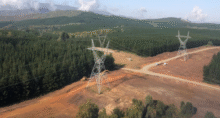
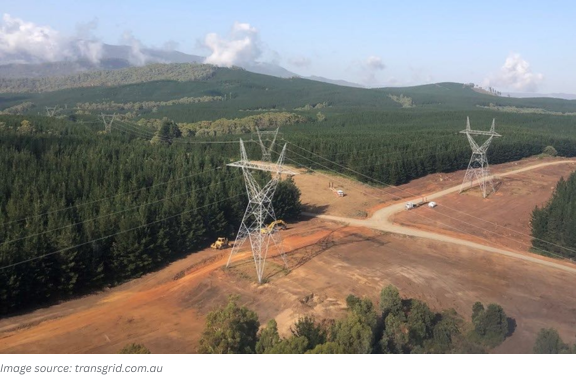
HumeLink’s community opposition challenge is separately instructive on the transmission front. The project proceeded with route planning and design on an accelerated timeline that outpaced the community engagement required to achieve social licence for overhead lines. Landholder opposition forced multiple route changes and, in some instances, compulsory access. The irony was noted by commentators: undergrounding sections of the route — which would have materially reduced community opposition and its associated costs — was dismissed early without adequate assessment, even though the delays and redesign costs that followed arguably exceeded what undergrounding would have required. The governance insight here is not complex: community and land access considerations were treated as constraints to manage around rather than inputs to design decisions.
The Hills of Gold Wind Farm in NSW illustrates how late-emerging community opposition — even when ultimately resolved — extracts a significant toll. The $833 million Engie project near Nundle was contested for more than six years, partly through speculative residential applications designed to exploit planning protections. The NSW Department of Planning initially approved only 47 of the proposed 64 turbines based on one such application — for an unbuilt house just 330 metres from a turbine location. Engie ultimately prevailed, but the precedent-setting conflict consumed years of legal process, schedule risk and capital holding cost. Six months of delay on a project of that scale carries an estimated sunk cost in the hundreds of millions of dollars. The pattern — community and land access issues surfacing late, at scale, after capital commitments are made — is precisely what integrated governance is designed to prevent.
The EPBC backlog provides a systemic illustration. As of mid-2025, not a single renewable energy project deemed a controlled action under the EPBC in 2023 or 2024 had received federal environmental approval. Across Queensland, NSW and Victoria alone, 76 projects are waiting in that queue. The regulatory backlog is real, but it is not the whole story. For many projects, the EPBC process has exposed underlying gaps in how environmental, cultural heritage and community obligations were integrated into project design from the beginning — gaps that are difficult and expensive to address under approval-stage scrutiny.
The governance maturity gap
Most energy project teams are technically capable. The gap that creates delays, derails consent, and erodes stakeholder relationships is rarely technical. It is structural. It shows up as approvals processes that run independently of engagement strategies. As commercial timelines that are set before social licence questions are even asked. As First Nations obligations that are managed reactively rather than integrated into project governance from the outset.
Investors are increasingly attuned to this. Capital discipline now extends well beyond financial metrics. Project proponents who can demonstrate coherent, integrated governance — particularly around land, community and First Nations engagement — are better positioned to attract and retain investment and move projects through the development pipeline with fewer disruptions.
What integrated governance actually looks like
It starts with recognising that stakeholder engagement, approvals strategy, land access, cultural heritage, and First Nations partnership are not separate functions to be coordinated after key decisions are made. They are inputs into those decisions.
Governance maturity means bringing these disciplines into project governance structures early — not as compliance checkboxes, but as genuine contributors to risk management and value protection. It means building relationships before you need them, sequencing approvals in ways that reflect community and regulatory realities, and designing commercial frameworks that are durable enough to survive the long implementation periods that major infrastructure demands.
The projects that demonstrate this — Yindjibarndi, Avonlie and others emerging across the sector — share a common structural characteristic: the people responsible for land, community and First Nations engagement were at the table when project scope and commercial frameworks were being set, not brought in to manage the consequences after those decisions were made.
However, it is also worth noting that although 43% of all clean energy infrastructure will be sited on traditional Country – lands and water – under the care or custodianship of First Nations communities, there are no operational utility scale renewable energy projects in Australia that have First Nations equity ownership. In Canada by contrast, approximately 20% of operational clean energy projects include First Nations equity participation.
The transition depends on it
Australia has the resource base, the policy momentum and the technical capability to lead one of the most significant infrastructure buildouts in its history. What will determine whether that potential is realised — or stalled in approvals, disputes and community opposition — is governance maturity.
The evidence is now concrete. Where governance has been integrated early, projects are moving forward with First Nations partnerships, community support and investor confidence. Where it has not, the costs have been measured in billions of dollars of blowouts, years of delay, and relationships that are difficult and expensive to repair.
Technical capability will remain essential. But the projects that define Australia’s energy future will be the ones that understood, early, that governance is not a constraint on delivery. It is the foundation of it.
Q&A
Question: What is “governance maturity” in Australia’s energy transition, and why does it matter more than engineering alone?
Short answer: Governance maturity means integrating land access, approvals strategy, First Nations partnership, community engagement and investor requirements into project decisions from the very start—not treating them as siloed, downstream tasks. Projects that do this gain social licence, regulatory certainty and capital confidence; those that don’t face late-stage opposition, delays and cost blowouts. The evidence spans both successes (e.g., Yindjibarndi, Avonlie) and failures (e.g., Snowy 2.0/HumeLink), showing governance is the foundation of delivery, not a constraint on it.
Question: Why is land access described as a governance maturity outcome rather than a transactional milestone?
Short answer: Because durable land access is shaped by how approvals sequencing, stakeholder engagement and commercial decisions are integrated from day one. When these functions run in parallel silos, friction appears late—after capital is committed and schedules are tight—compounding cost and time impacts. Embedding governance early within risk and capital allocation processes anticipates complexity, sequences it appropriately and assigns clear ownership, materially increasing certainty.
Question: What does good integrated governance look like in practice?
Short answer: Two examples:
- Yindjibarndi Renewable Energy Project (WA): A JV between ACEN (75%) and Yindjibarndi Aboriginal Corporation (25%), with Stage 1 >$1b for 400MW solar (plus battery options) and 300MW wind. First Nations participation is embedded in the commercial framework, including decision rights—governance was built around the partnership from the outset.
- Avonlie Solar Farm (NSW): Iberdrola/Beon began engagement months before late‑2021 construction near Narrandera on Wiradjuri Country. Beon hired a local Wiradjuri/Yorta Yorta woman, worked with Elders, hosted meetings and addressed barriers to employment—resulting in 30+ local First Nations jobs and lasting cultural competency gains. In both cases, First Nations engagement and land governance were inputs into design, not hurdles to clear.
Question: What does failure or misalignment look like, and what were the consequences?
Short answer: Proceeding before aligning transmission, community and land access drives blowouts and delays. Snowy 2.0 began construction before its transmission connection and full costs were understood; its estimate rose from under $3b to ~ $12b. The associated HumeLink line grew from ~ $1.3b to ~ $4.9b, with community opposition along its 365km route adding redesigns, compulsory access and legal complexity; combined costs could exceed $20b. HumeLink’s early dismissal of undergrounding arguably cost more through subsequent delay and redesign. The Hills of Gold Wind Farm (NSW) spent six-plus years in dispute, with initial turbine reductions tied to a speculative, unbuilt dwelling; even after approval, the holding and legal costs were significant. Systemically, the EPBC backlog (as of mid‑2025, zero 2023–24 controlled‑action renewables approved; 76 queued across QLD/NSW/VIC) has exposed integration gaps in environmental, cultural heritage and community obligations embedded too late in project design.
Question: Why highlight First Nations equity participation, and how does Australia compare internationally?
Short answer: Although about 43% of clean energy infrastructure will be sited on traditional Country, there are no operational utility‑scale renewable projects in Australia with First Nations equity ownership. By contrast, roughly 20% of operational clean energy projects in Canada include First Nations equity. The governance maturity signal is clear: structuring equity participation and decision rights from the outset strengthens consent, social licence and the durability of long‑term agreements—key ingredients for timely, bankable delivery.
Simply Stakeholders partners with energy and infrastructure proponents to integrate stakeholder engagement, land access and First Nations engagement into project governance from the outset — building the alignment that accelerates delivery and protects long-term value.
References:
First Nations Clean Energy Strategy Case Studies
Eleven lessons from the blow out in costs for HumeLink transmission line
Phantom Dwellings in Australia: A Growing Barrier for Renewable Energy Projects
Black hole: Dozens of renewable energy projects still waiting on EPBC decision